What Makes Readers Bored
It’s not easy to write interesting copy, an interesting book, an interesting script, etc. If you don’t connect with your readers properly or give them something to latch on to, you’ll lose them in the first few paragraphs.
My number one tip for not boring your readers is to tell a story. It doesn’t have to be a lengthy story and it doesn’t have to have a plot or dialogue or anything else – it just has to take them from point A to point B, or help them visualize a real-life situation.
Here’s an example of some writing that’s rather boring due to a lack of storytelling:
“AirPods are headphones without wires. They come with a case that has a connector for charging, and they allow you to listen to sounds without having to be right next to the device. They are superior to other types of headphones.”
Okay. So they’re headphones, so they have no wires, so they’re “superior.” And? Snooze.
Let’s tell a story instead:
“AirPods allow you to live life untethered. Even though they’re wireless, these headphones give you the same crisp sound without the worry of untangling knots in the wires, threading wires through your coat in winter, or brushing them out of your face during a jog. You can charge the AirPods easily with the included case, and they’re still small enough to fit in your pocket.”
See the difference?
I told micro-stories, in a sense. I brought the AirPods to life by creating real-world scenarios that the reader could visualize. There is no true beginning or end for the storytelling here, like you’d see in a novel or short story; it’s just me allowing the reader to move quickly through the different experiences one has when using headphones. It makes a static thing more vibrant and interesting.
You can apply this technique to many types of writing. In fact, the original purpose of writing was to record information or to document oral stories. So why not focus on storytelling first?
Other things that make readers bored:
- The same type or length of sentences, over and over again.
- A lack of detail in the descriptions.
Let’s take a look at this example:
“Josh went to visit his mother. He knocked on the door softly. She peered through a crack. She recognized his face so she opened the door. He smiled and walked inside.”
All of the sentences start with Josh/he/she plus a verb. Most of them are almost the same length, and there isn’t much detail for me to visualize. All I can imagine is a man with no features who is either young or middle-aged, some sort of door, and a woman who also has no features and could be aged forty to ninety (we don’t know).
We do almost get a clue because she peers through a crack rather than opening the door immediately, but this could mean: 1. she’s old, 2. she’s mentally ill, 3. someone is after her, or 4. she’s got PTSD from some sort of past experience. Don’t leave the reader guessing which it is.
How about this instead:
“Josh went to visit his mother. He knocked on the door softly, and she peered out through a tiny crack in an effort to recognize his face. Relief washed over her as she took in the brown hair brushing his forehead, the blue eyes she’d stared into for the past thirty-five years, and the familiar bag of groceries at his side. She opened the door fully then. Josh smiled broadly at his mother, wrapped his arms around her frail body and lifted her briefly into the air, and stepped inside.”
In this version, I only started sentences with “he” or “she” once, I created some compound sentences (with commas) to change the pacing, and I began one of the sentences with the word “Relief” for some variation in construction. I also added lots of descriptive detail.
We now know a bit of what Josh looks like, how old he is, why he’s there, and how much he adores his mother. We also know more about his mother’s age, her state of health, and that these visits are regular occurrences she’s come to expect.
See what I mean?
So to summarize:
- Tell a story or take the reader through real-world scenarios.
- Vary the sentence structure and mix simple sentences with compound ones.
- Add enough detail so your reader can truly visualize whatever you are trying to create.
There are other things that make readers bored, like a poorly constructed plot for a novel, but from a mechanics and crafting perspective, these three techniques are good places to start if you want to improve your work immediately.
Happy writing!
———
To leave a comment or share this post, scroll down.
My first book, Halfway There: Lessons at Midlife, was released on August 18, 2020 by Warren Publishing and was re-released on February 16, 2021 by White Ocean Press. To read an excerpt, check out reviews, see the author Q&A, or find links to buy, click the Learn More button.

Will Anyone Like My Book?
As I was going along on my journey toward authorship, a question I often asked myself was, “Is anyone even going to like this?” And then I’d follow it up with, “Am I putting myself out there just to be rejected?”
For people in a rush, I’ll give you a quick answer: YES, someone will like your book. Write it. 🙂
But to break it down a bit, I think the question most people are actually asking is, “Will lots of people like this?” Meaning, numbers that publishers would consider a success and that might create a new career opportunity for an aspiring author.
The answer to that one is: Well… (you probably know what I will say anyway)
It’s a bummer to realize that mainstream success might be tough, especially when your dream is to achieve success in that way. But I think we need to work on how we define “success” when it comes to publishing a book, and also how we define “lots” when it comes to the number of people who find it meaningful.
What I’ve learned is that if you’re driven to write a book, and when it’s from some sort of internal place that has nothing to do with fame and accolades, then there are people out there who will want to read it. One of my teachers used to say (when I was studying to be a yoga teacher) that the students who need you will show up for whatever you, in your uniqueness, have to offer.
So I say to you that the readers who need you will show up for whatever you, in your uniqueness, have to offer. And that YES, someone will like your book. In fact, MANY someones might like your book.
I think the amount of material success a particular book achieves is really out of our hands anyway, and I mean this on a material level but also sort of on an otherworldly level. Materially, some books sell widely because they have powerful publishing houses to create a marketing machine on behalf of the author and his/her work. High dollars translate to high visibility in the marketplace.
But!
My (extremely popular) dentist has a plaque on the wall in one of the patient rooms that says, “Our greatest compliment is your referral.” So don’t underestimate the power of word-of-mouth to conquer the material part of selling a book that is well-written. It happens ALL the time.
On a more otherworldly level, though, the success of your book may depend on what the planet needs right now. If lots of people need what you have to say, and if it’s your purpose in life to say it broadly with this book (not having a hit now doesn’t mean you won’t have one later), you might have a better shot at mainstream success. But if a smaller part of the world needs what you have to say, it may never make it to mainstream even though the book may be equally as good as another really popular one. This is not a failure.
I think when we ask questions like, “How can I sell a lot of copies” or “How do I make it to the bestseller list,” we are missing the actual point. I suspect bestsellers are the result, mostly, of people not focusing on writing a bestseller – they are focused instead on doing their best work and offering something special to the world. If people like it, great. If people don’t, well, the author likes it and feels satisfied in what they’ve done.
So I challenge you to write regardless of the outcome, and to know that whatever you create is needed – simply because you want to create it. How we define success as a writer, author, artist, musician, or other creative type should be based on intent and quality anyway. Meaning, can we produce something unique that even one or two other people find life-altering or impactful? That’s the goal. That’s success as an author, even if we have to maintain our day jobs to make our bills.
———
To leave a comment or share this post, scroll down.
My first book, Halfway There: Lessons at Midlife, was released on August 18, 2020 by Warren Publishing and was re-released on February 16, 2021 by White Ocean Press. To read an excerpt, check out reviews, see the author Q&A, or find links to buy, click the Learn More button.
Fallow Periods
I don’t think life is meant to be a continuous charging forward—one with no pit stops, no breakdowns, and no change in direction. And yet we act like it is. We act like unless we are walking a certain path, with a certain style, we are failing at life. And then if we have a catastrophe or if we aren’t sure where we are for a little while, we’re doing it all wrong.
But that’s not really how life works.
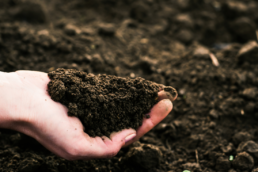
Like many other humans, I can say that almost nothing has gone according to plan in my own life. I might have a destination in mind and maybe I get there eventually, but the directions often rewrite themselves along the way. Or the road isn’t as smooth as I thought it would be, or it doesn’t wind in the direction I expected. And then sometimes I find myself at a dead end entirely, sitting in a pile of loose dirt that marks a fallow period and therefore breaks up my journey with seeming non-movement.
And that’s what I want to talk about now. Fallow periods. The times when we feel like we’re at a standstill but perhaps really aren’t.
I often think about how fields cannot produce abundance without time for the soil to lay fallow: to replenish its nutrients, to regain its energy, to recover its ability to push out incredible life forms. And so it goes with humans, too. Sometimes we’re simply in a fallow period and, although we don’t see it that way, it’s actually a necessary period we need to pass through in order to recalibrate our journey to whatever comes next.
A fallow period can appear in a lot of ways, I think. It can appear most prominently via unemployment when you’ve literally got nothing to do. All the downtime then forces you to sit in the present moment and to confront your own emotions around what that present moment means. Then maybe you move into thinking about what your past looked like and how your future may look a bit different, and sometimes you even change direction—either by necessity or by force.
It can also appear when someone dies. A death often makes us hit pause on our own lives as we fall into grief. Then we find ourselves in a sort of suspended animation, watching the rest of the world as through a window, with everyone moving along as if nothing has happened. And yet we now have to stop everything before we can start anew, because our life is so different without that person in it.
It can also appear in times like these—pandemic times. Times when we’re forced to be more still, to wait, to suffer, to reevaluate. Times when we’re unsure of when it all will end and what it all means anyway, and times when we’re forced to look at our lives in a fresh way. What’s really important? Who is really important? Am I using my time in the best way I can?
This year, 2020, was a significant fallow period for me—and not just because of the pandemic. And for a while I was really distressed by it. By this pause, as I wrote about in The Big Pause. By this not doing of anything, really. And then I realized what it actually was (a fallow period) and I told myself it was okay. I gave myself permission to have a fallow period and to experience it in whatever way that might be.
If you’re in a fallow period right now, regardless of how that period arrived in your life, could you give yourself permission to just be in it? To experience it fully as a period of preparation rather than as lack of progress? And, yes, to recognize that it’s a period of uncertainty and discomfort, but to also know that it’s a necessary one to propel you on your way?
I started emerging from my fallow period only a few weeks ago, and when I realized the fallow period had ended of its own accord (without much effort by me, to tell the truth), I was glad I’d chosen to sit in it while it was here. To not fight it, but to instead use it as a space to ready myself for whatever came next.
Do not fear the fallow periods. Use them instead for self-discovery, and to tune in to your internal frequencies. And also, try not to stress about them even though they can be very stressful (especially if your unemployment benefits, for example, are about to end like mine were).
Remember that something greater than you could ever imagine is moving the pieces on the game board and closing or opening doors for you. Trust in that presence—whatever you believe it to be—and just sit in the moment that has been given to you. Every moment, including a seemingly inactive one, is always given to you for a reason.
———
To leave a comment or share this post, scroll down.
My first book, Halfway There: Lessons at Midlife, was released on August 18, 2020 by Warren Publishing and was re-released on February 16, 2021 by White Ocean Press. To read an excerpt, check out reviews, see the author Q&A, or find links to buy, click the Learn More button.
Daily Word Counts
Do you give yourself a daily word count to hit? Have you thought about smashing that rule to pieces?
I’ve been writing for two decades so you may be surprised to hear that I’ve never given myself daily word counts. But before I elaborate on why you might want to follow suit, I do think a daily word count works for some people. Reasons:
- It forces you to maintain discipline
- It helps you meet deadlines (if you have them)
- It makes you feel good about your work
- It is a tangible measurement of progress
But here’s what I think happens sometimes when you impose inflexible word counts on yourself:
- You get stuck/blocked
- You write uninspired drafts
- You become too frustrated
- You sometimes feel like a failure
- You write before you’re actually ready to do so
I like that last point the most, because sometimes you’re just not ready to write the thing you want to write—as crappy as that might feel. Sometimes you need to live life, get some experience, and find inspiration. Sometimes faster isn’t actually the goal, and sometimes you’ll finally release a torrent of words after a long drought.
For me, daily word counts force me to write when I don’t want to or when I don’t actually have anything to say. So how do I make progress, you might ask, if I don’t use word counts? Well, I set broad goals for myself instead. Here are some recent examples:
- I want to release a book of poems. I’m going to continue writing them as they come, and then when I have enough, I’ll comb through them and see what’s there.
- I want to finish a draft of my second book by the end of 2021. I’ll make sure to write a page or two as often as I can, and try to target 5,000 words per month, but if I run out of ideas or am uninspired, I’ll stop until I have more to flesh out. This is okay. I can adjust my date if necessary, because uninspired work is not what I want to produce.
- I want to submit some poems to a few literary journals. I’ll do this within the next three months. I’ll find some suitable journals first, and then I’ll identify some pieces to submit.
Sure, this means it sometimes takes me longer to get a project done. But the draft I do write is much stronger than the one I’d write if I forced my brain to string together words it hadn’t quite figured out. It’s also a much less frustrating process.
And I’ll leave this little nugget here too: You do NOT have to write every day to be a “real” writer. I’ve had people tell me I need to write every day. No, I don’t. What I need to do is to write regularly so that I continue to work on my craft, but I don’t need to write every single day – and neither do you.
What do you think? Do you like word counts? Hate them? Have you tried it both ways? Leave your thoughts in the comments below!
———
To leave a comment or share this post, scroll down.
My first book, Halfway There: Lessons at Midlife, was released on August 18, 2020 by Warren Publishing and was re-released on February 16, 2021 by White Ocean Press. To read an excerpt, check out reviews, see the author Q&A, or find links to buy, click the Learn More button.
Tips for Getting Moving
I recently came across a writer who had been sitting on an outline for years. He wanted to lock himself in a cabin to make himself write, but I argued that locking oneself in a cabin will be ineffective if the underlying issue is fear.
Are you afraid to write?
If so, tell yourself the following:
1. I am allowed to write badly. Everybody writes garbage.
2. I can’t edit a blank page. It’s better to have something there.
3. I am going to write without editing. I can do that later.
4. I will refrain from judging anything I write. I can do that later.
5. If I don’t do well enough the first time, I’ll just try again.
6. My desire to write a book comes from something that is greater than my mind. I am going to trust whatever that is to also grant me the ability to do it.
Once you’ve solved this problem, feel free to go lock yourself in a cabin. 🙂
———
To leave a comment or share this post, scroll down.
My first book, Halfway There: Lessons at Midlife, was released on August 18, 2020 by Warren Publishing and was re-released on February 16, 2021 by White Ocean Press. To read an excerpt, check out reviews, see the author Q&A, or find links to buy, click the Learn More button.
The Worm That Changed My Mind
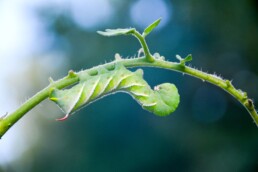
About a month ago, I came across a tomato hornworm on my cherry tomato plant. If you haven’t seen a tomato hornworm (and I don’t intend for this to be a long, boring diatribe about a worm, but you need to read the story to get my point), it’s a really large, green worm that is about as big and thick as my thumb.
As is often the case with Mother Nature, these worms are cleverly made to blend in with their target plants and are therefore extremely hard to spot. For the previous 36 hours, I’d scratched my head and stared at the plant, wondering what could possibly have decimated it so quickly. A third of the leaves were gone, half of the fruit was gone, and the stems were eaten down to nubs. I looked and looked but couldn’t find any anything out of the ordinary.
I’d learned a few months back that sometimes cutting off all the injured or diseased parts was step one to a plant’s healing, much like how we humans start to heal when we treat our underlying disease or remove things that are broken (like my poor gallbladder, may it RIP). And it was when I went around to prune off the jagged stems and half-eaten fruit that I suddenly spotted him gnawing contentedly on one of my green tomatoes.
I dropped my pruner and ran inside the house. Yelling up the stairs to my husband, who was working in his office, I requested that he come down immediately to provide moral support while I attempted to remove a huge worm from my plant. He was unsure of why I needed such support, but as good husbands do, he came outside.
“I don’t see anything,” he said.
“Right there. Look. There.” I pointed.
“Where?”
“Right here, see? He’s on the stem,” still pointing.
“I don’t see it…”
And then, “Ohhhhh. Wow, they sure do blend in.”
As someone who likes to be thoroughly prepared so as to assure my own success, I’d already researched every possible tomato plant (and pest) issue – including the tomato hornworm. And the internets had told me I should remove said worm and throw him into a bucket of soapy water to snuff him out – much like stink bugs and caterpillars and the like.
Okay.
So I went and got a clear plastic cup, added some water and dish soap, put on my glove like a surgeon, and went back outside to attempt to pull him off while proclaiming, “Yuck yuck yuck!” audibly enough for the neighbors to overhear.
Except he wouldn’t come off.
I tried, he clung tight. I tried harder, he didn’t budge. Eventually I realized I wasn’t going to squish him if I gripped and pulled him off like Velcro, so I finally won the battle and quickly heaved him into the cup.
“Phew,” I said to my husband, relief washing over me that I’d done this necessary gardening thing and therefore was probably legit initiated into it now.
But then I looked over and saw this poor worm struggling, drowning, suffocating in a soapy swimming pool with insurmountable walls. And I felt my heart start to crumble.
“Gawd. I just can’t do that to him, Jason,” I said, and quickly dumped him out onto the grass. “It makes me really sad.”
“Yeah,” he said, understanding what I meant.
I thought for a moment about what I ought to do next, with said worm now squiggling around on the grass helplessly near my back gate. So I scooped him up in the empty cup – which had small soap bubbles still clinging to the rim – and then I marched out of my backyard, around my house, and down the street to a little clump of native brush that somehow hadn’t been destroyed by the construction of our neighborhood about 12 years ago (Texas has a nasty habit of bulldozing everything to the ground). I then heaved him into said brush even though I’d come to realize he’d likely die anyway from the soap residue, and I sent a silent well wish and an apology to his little soul.
Maybe my behavior sounds a bit nonsensical because, after all, it’s just a worm. But I tell you this story because the worm changed how I see the life around me. It made me realize that we often fear the things we do not understand – and this fear response is an important behavior for us humans (myself included) to learn to manage properly.
I feared him because he looked different than any bug I’d ever encountered. He was large, he was green, he had a little horn on his back, and there were multiple sets of feet clinging tightly to a branch that was half the diameter of his massive body.
I also feared him because I did not truly see him. What I mean is, I didn’t see him as part of the same life that exists in me, nor did I see him as an important part of the well-oiled mechanics of our planet. He was just hanging around, doing what he’s supposed to do – which is, yes, eat my tomatoes – but I didn’t acknowledge that he has as much right to the plant as I have. We all share this planet and its resources, and I really had enough tomato plants left over that I could have given that one to him and been just fine.
I think we do this fear response thing a lot, fellow humans. I think this is why we have so much prejudice, and intolerance, and lack of understanding, and weird behavior. It’s because we don’t understand the “other” and therefore we are afraid of that thing or person or animal or way of life.
And what do we do when we’re afraid? We self-protect. We mount our defenses. We turn our heads in disgust, we kill, or sometimes we just run away. In other words, we lose ourselves in some weird egoic protective instinct instead of clearing our heads and seeing the world for what it really is: a place where we are all kind of the same.
Back in grade school, I was fascinated to learn that everything is made up of atoms which are then comprised of sub-atomic particles. A recent Google search says the smallest currently known particle is a quark (these are sub-atomic particles that combine to create protons and neutrons), and that we don’t yet have the ability to break these particles down further.
So we are ALL comprised of this stuff at our core – and it’s true as much for you as it is for a rock, a bird, a tree, or a worm.
I feel like once we get in touch with what this really means, we can start to rethink some of our behaviors. This is why I felt sad for hurting the worm and had to abort the mission: killing him was killing a part of myself, a part of my essence, because we are formed from the same stuff. And not everyone is going to be able to follow me when I say that (it’s okay if you don’t). But I try very hard not to kill anything and this little guy was new to my world. So I got afraid and lost my center until I looked, understood what he was, and immediately changed course.
Have you lost your center with people who aren’t like you? Or maybe with that little rat who lives outside your house, doing nothing but trying to live life just like you are, but you simply don’t want to share the space with him because you’re afraid he’ll <fill in the blank>?
What this time in our history has taught me is that so many people live their lives in a fear state. It’s MINE. They’ll TAKE what’s MINE. There’s not ENOUGH to go around. I’ve got to have my SHARE. They’re coming to take my LIFE, my PROPERTY, my LIBERTY.
Me, me, me. But what about others?
What about this planet of ours that is smoldering? What about the humans who are starving? What about the ecosystems that are collapsing?
What about the trees that are eaten by big machines to make way for MORE buildings? And what about the animals that are killed with poison, with shovels, with guns simply because they want to exist just like you do but landed in your space by chance?
It’s not all about us, fellow humans.
So I can tell you exactly how I’ll react the next time I see a tomato hornworm: I’ll look at him with kindness and I’ll tell him hello. And then I’ll tell him I appreciate that he’s visited and has found some food, but that this is my food, and I hope he has had a good helping and can find more food elsewhere.
And then I’ll glove myself again like a surgeon to pry him off the stem, but this time I’ll place him gently into an EMPTY cup. I’ll walk down the street to that patch of brush, drop him there carefully to give him his best shot at survival, and wish him well as he goes on his way.
This is how life should be, guys. This is how we should be to each other – to other people, to animals, to birds, to bugs, to plants, to the planet. Let’s not forget that we all need each other in order to exist. Too many people don’t seem to understand this anymore, and if we don’t get it together…well, I don’t want to think about that. We’re already seeing it on the west coast, and with storms, and with temperatures rising, and with…so many things.
Let’s all just try to do better.
———
To leave a comment or share this post, scroll down.
My first book, Halfway There: Lessons at Midlife, was released on August 18, 2020 by Warren Publishing and was re-released on February 16, 2021 by White Ocean Press. To read an excerpt, check out reviews, see the author Q&A, or find links to buy, click the Learn More button.
2020
2020
by Elizabeth C. Haynes
The clouds are moving in, over my life.
Rolling dark gray since the pandemic.
With the sick tumbling across the land
Inundating beds, and nurses, and doctors.
But with a populace looking on, utterly unconcerned
Because they’d rather pretend to be free.
———
To leave a comment or share this post, scroll down.
My first book, Halfway There: Lessons at Midlife, was released on August 18, 2020 by Warren Publishing and was re-released on February 16, 2021 by White Ocean Press. To read an excerpt, check out reviews, see the author Q&A, or find links to buy, click the Learn More button.
Dollars and Cents
Dollars and Cents
by Elizabeth C. Haynes
I envision some of the men
with souls inside like Shrinky Dinks.
Withering away with each new dollar,
billions of them, piled on top,
weighing down and dissolving the
skin and bones into their essence.
The eternal self.
Far away and small, though,
the lights barely lit.
Their very existence diminishing
with made-up dollars and cents.
———
To leave a comment or share this post, scroll down.
My first book, Halfway There: Lessons at Midlife, was released on August 18, 2020 by Warren Publishing and was re-released on February 16, 2021 by White Ocean Press. To read an excerpt, check out reviews, see the author Q&A, or find links to buy, click the Learn More button.
The Big Pause
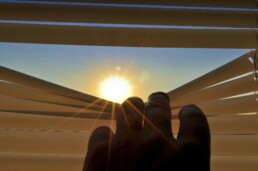
I was sitting on my patio this morning watching some rare summer rain rumble in from the east, the winds pushing through the neighbor’s trees as the sparrows flitted around my feeders, when I coined a new term for myself and my current reality: The Big Pause.
I’m in this weird place in my life right now where I’m sort of “in between.” In between then and now. In between health and sickness. In between joy and sorrow. And in between who I was and who I may become. As a result of all of this instability, I’m spending a lot of my time during this pandemic (and during this break in my work life) just sort of existing.
So this means I get up in the morning and I make some sort of breakfast, whether it’s oatmeal or eggs or gluten-free pancakes, and I follow it up religiously with a little cup of homemade vegan chai. I sip it from my pale green, polka-dotted teacup with a rim of gold that I bought myself after buying one as a gift for a dear friend of mine. I loved it so much – and she loved it so much – that I ordered one for myself, too. It not only made me happy, but it made me feel closer to her in a way. We are separated by hundreds of miles and many states the last few years, and I miss her dearly as a physical presence in my life.
When I’m finished downing the many pills and supplements I have to swallow in the first hours of my day, I use the mental notes I’ve taken on my body and my health since I woke up to decide what I’m going to do next. I have just a few choices these days and most of them don’t involve much.
Option 1: If it’s cool enough, I go tend to my plants in the garden or look for my squirrel (yep I feed a squirrel; I have named him Marley).
Option 2: If I have enough energy, I do a fifteen- to twenty-minute yoga practice by myself in the spare room.
Option 3: If I’m feeling creative, I sit down to write or maybe head to the kitchen to bake something.
Option 4: If I’m feeling sick, as is quite often the case in the last six months, I don’t do much of anything. I lay on the sofa and let myself reside in the “in between.” Or, as I was doing this morning, I sit outside with the rain brushing against the side of my skin nearest the wind, and I watch it form puddles on the ground.
I breathe. I wait. And I don’t rush whatever is to come next.
I’ve coined this time of my life “The Big Pause” because that’s really what it is for me – the biggest pause of my entire life. But also, I got to thinking about how most of humanity could really use a Big Pause sometimes. We go and go, and traverse a number of obstacles and heartaches, until we get to a point where we’re just worn out and have nothing left to give to ourselves or to anyone else. We’re tired from our hearts all the way to our bones and our skin, and we badly need to take a rest (although most of us rarely do).
Many of us have finally been given that bit of rest because of the pandemic (not a stress-free rest, mind you), and I’ve observed so many people talking about “making the most” of the time if you happen to find yourself in a pause because you’re jobless, or because you’re scared to leave your home, or because the world is crumbling around you and you aren’t sure how to handle it all just yet. And I don’t think becoming more busy is necessarily what we should be doing.
Well, not all of us anyway.
I think 2020 will unfold very differently for each person depending on their individual circumstances and their personality. And we should make room for every version of this unfolding in what is considered “okay” and a “successful use of time.” Some people might put immediate action and goals into place – and this is great – but some people can’t do anything but just sit and wait for a while.
I’m sort of in the latter category: I’m sitting and waiting. I know things are changing dramatically and that I’m getting closer to some truth about myself that’s been brewing for decades, but this process is not one I can push along. It’s not one I can write my way into or out of, or will my way into or out of, or otherwise tangibly manipulate until the time is right for it to manifest in my life. And on some days, when I feel particularly lost or worried about finances, it’s an exceptionally painful time to traverse.
I’ve seen many people building masterpieces in their Big Pause, which is great if that’s how life is unfolding for you – and I kind of wish it was that way for me. I honestly felt distraught in the beginning because I wasn’t able to do something of the same with my own free time. However when I examined the unique circumstances of my life rather than looking at the lives of others, I realized I was already at the end of my masterpiece (my first book). I’d been working on it for several years and was wrapping it up when the pandemic hit, so I wasn’t in a place to light new fires and create new contributions.
I’m still not.
And I keep wondering when I will be. Maybe in 2021?
I think most people mean well when they say you should take advantage of every moment you have right now (or in life in general), but I think we also need to examine what we define as “advantage.” For me, taking full advantage of this moment means I’m not doing much of anything that would be considered productive – not unless I feel like it, like I do right now. I’m in a period of desperately needed rest that I’ve pined for since late adolescence, and I’m not going to squander it.
I know there will come a day when The Big Pause will be over. I know there will come a day when I’ll be ready to do something else or move in a different direction. But I’m not going to force it to come before it’s ready, and I’m not going to busy myself into creating something that others deem more valuable – like churning out another book when my heart couldn’t possibly be in one right now. I’m going to do what feels right for me. And I encourage you to do the same.
Times are tough for everyone and we are all processing things differently. Don’t fall victim to the idea that you have to be anyone other than who you are in this moment, even if that means you feel like an outcast or that perhaps you should order some bonbons with your next grocery pickup.
Remember that gardens need a fallow period in order to grow green riches that spill over the sides, with tendrils grasping at soil and air, climbing out to become the greatest expression of what they were meant to be. Don’t skip that part. Don’t be ashamed to not “produce” for a while. Don’t be afraid to take your Big Pause – especially right now. I think more people than ever need to stop and breathe for a bit so that maybe humanity can be different going forward.
———
To leave a comment or share this post, scroll down.
My first book, Halfway There: Lessons at Midlife, was released on August 18, 2020 by Warren Publishing and was re-released on February 16, 2021 by White Ocean Press. To read an excerpt, check out reviews, see the author Q&A, or find links to buy, click the Learn More button.
Difficult Times
I’ve never lived through a pandemic before and I’m pretty sure you haven’t either. So each one of us is approaching our lives right now without a toolbox. Without an instruction booklet. Without a compass or a shortcut and without knowing how to make it to the other side.
Go easy on yourself.
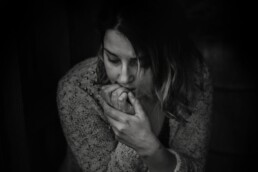
I think we’re all having days where we’re struggling to maintain our positivity. Sometimes the dark thoughts completely char our world for a few hours, or sometimes we recognize keenly that there will be more collapse and death before this chapter of our history is closed. The ongoing daily trials of soldiering through so much uncertainty can make us feel very sad or very afraid sometimes. At least, this is what happens to me regularly now.
But I like to remind myself that my feelings are heavily influenced by my brain—the part of my body that thinks and plans and maps out a future that doesn’t even exist yet. It’s just one part of my body, true. But it’s a powerful one when it goes rogue from all the stress.
So when I feel like I’m drowning emotionally, I’ve made an effort to put my screen away and get quiet instead. I use that time to tune in to my essential self: the “me” that sits calmly beneath the ruckus, unbothered and unafraid. The “me” that knows humanity has been subjected to plagues and pandemics before, that many people died, but also that many people lived and went on to build new and different ways of being—often better than before—from the ruins of those experiences.
The essential me understands that we humans are mere specks on this planet and in this universe, and that although we think we are in charge, we really aren’t. We have an illusion of control because we conquer and destroy and consume, but we don’t have it, really. So then I ask myself, “Why, Elizabeth, are you worrying about a lack of control when you never really had it to begin with?”
I find it’s often best to let my fearful thoughts roll onward like storm clouds, and to just make the best decisions I can every day. You know, like washing my hands and staying safe at home. It’s also helpful to stand back a little and observe whatever transpires in order to discover the lessons in what I’m living through. I don’t think it’s an accident that any of us are alive at this moment in history.
Some of you know that I used to be a yoga teacher before my health issues hit. In fact, I’m a certified yoga and meditation teacher although I don’t wave it around obnoxiously. I tell you this because I think now is an exceptional time to learn how to get quiet. It’s the best way to maintain our sanity when we’re flailing around, because we remove ourselves from an unwritten future and instead focus on the present moment. And unless we’re in the hospital or being mugged or our cat is dying, the present moment is usually okay.
I like to take my lessons from the pages of Thich Nhat Hanh’s playbook. One of them goes like this:
1.Sit quietly.
2.Breathe in and out.
3.Notice that you are breathing in and out.
That’s it.
My favorite variation of this exercise, if you want to explore it a bit more, is where you say to yourself (while breathing):
“Breathing in, I smile. Breathing out, I release all my worries and anxieties.”
I find that even a few breaths like this can be grounding and will turn down the intensity of my emotions.
I know it doesn’t feel like it, but there really are so many things we can do despite living in a time of social isolation and perceived powerlessness. We can choose how we respond to the world and to our stresses, and we can choose to do this positively (to the extent that we’re able to, anyway). We can also breathe in and out, as I mentioned. Or we can think about our dreams and start sketching out a roadmap. Or we can write. Or we can walk. Or we can find ways to help others. Or we can just rest.
There is so much possibility in the pause.
My hope is that all of us take this time to not only contemplate what we might like to do differently in our lives going forward, but to learn something about ourselves and how we can continue to evolve. I know you’re hurting in one way or another; I’m hurting too. Even the people who still have jobs and whose loved ones aren’t sick are hurting and live in fear of what’s next.
You are not alone.
So while you try to cope, make sure to breathe and pull yourself back into the present moment every once in a while—where you are okay, where you still have food, and where you still have a roof over your head. None of the catastrophes in your mind have happened yet. And anyway, you’ll figure out how to persevere through everything once “everything” finally gets here. You have infinite knowledge in the quiet place inside of yourself…that non-thinking place. It’s where the answers to the hardest questions in life lie.
And if all of this doesn’t work on a particular day? Just go to sleep and try again tomorrow. Shutting my eyes and starting over with the sunrise works miraculously for me when even breathing feels too hard. Mornings have a way of bringing new perspective and a fresh start.
———
To leave a comment or share this post, scroll down.
My first book, Halfway There: Lessons at Midlife, was released on August 18, 2020 by Warren Publishing and was re-released on February 16, 2021 by White Ocean Press. To read an excerpt, check out reviews, see the author Q&A, or find links to buy, click the Learn More button.